How it was made
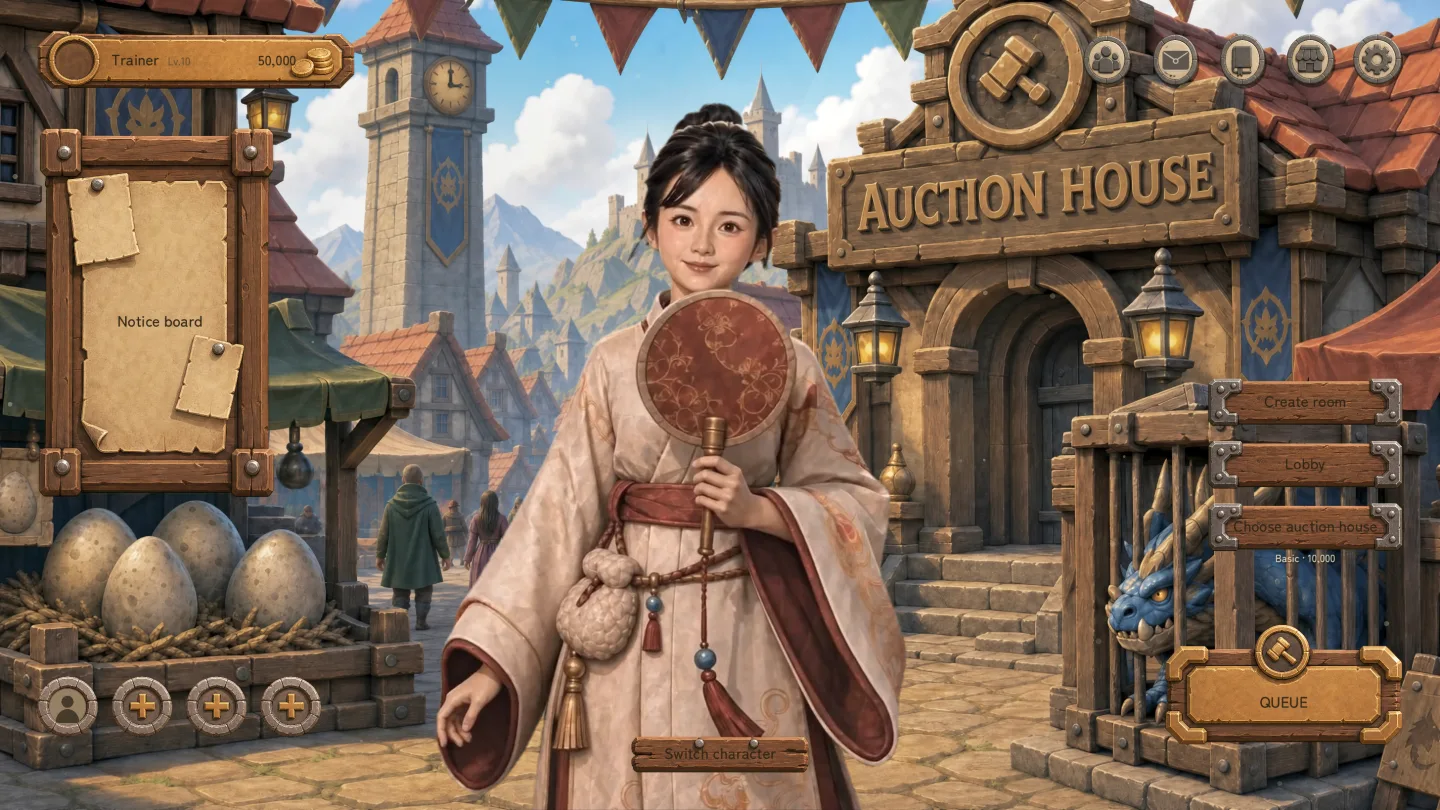
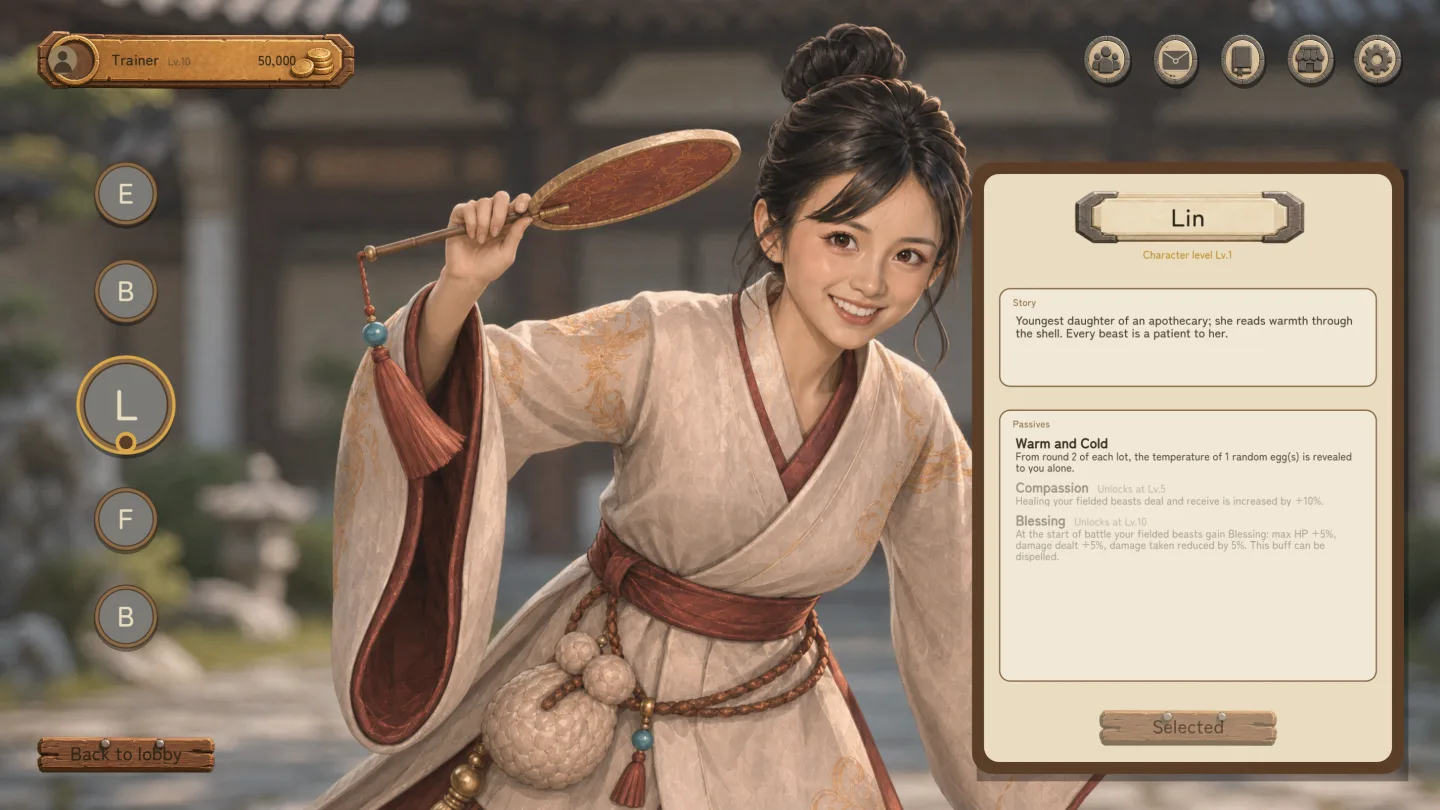
I designed the game and directed the AIs that built it. The rules and balance runs are written up with Claude in design documents before anything is coded, every decision mine; Claude then writes the Godot project against them and has to pass a headless regression after every logic change. The art direction was argued out with Claude before a single asset existed. Character art comes from image models in two steps, a turnaround sheet and then the lobby pose, with exactly one style reference, a rule learned when a second reference bled into the first version of Lin. Seedance animates her on a green screen; I key it by hand and a script turns it into in-game video with alpha. The lesson: image prompts are exact, animation prompts leave room. For this page an AI art department extended the shipped lobby into concept frames, and an AI engineer set the game's own type on them and cut the film.
The game
Four players, about twelve minutes a match. You are a beast trainer with the same hundred chips as everyone else. The first half is an auction where you bet on eggs you can't see inside; the second half is an arena where whatever hatched fights for you. The design keeps the two halves apart: auction rules never touch battle rules, and the only thread between them is the economy, chips to eggs to strength to placing.
The auction
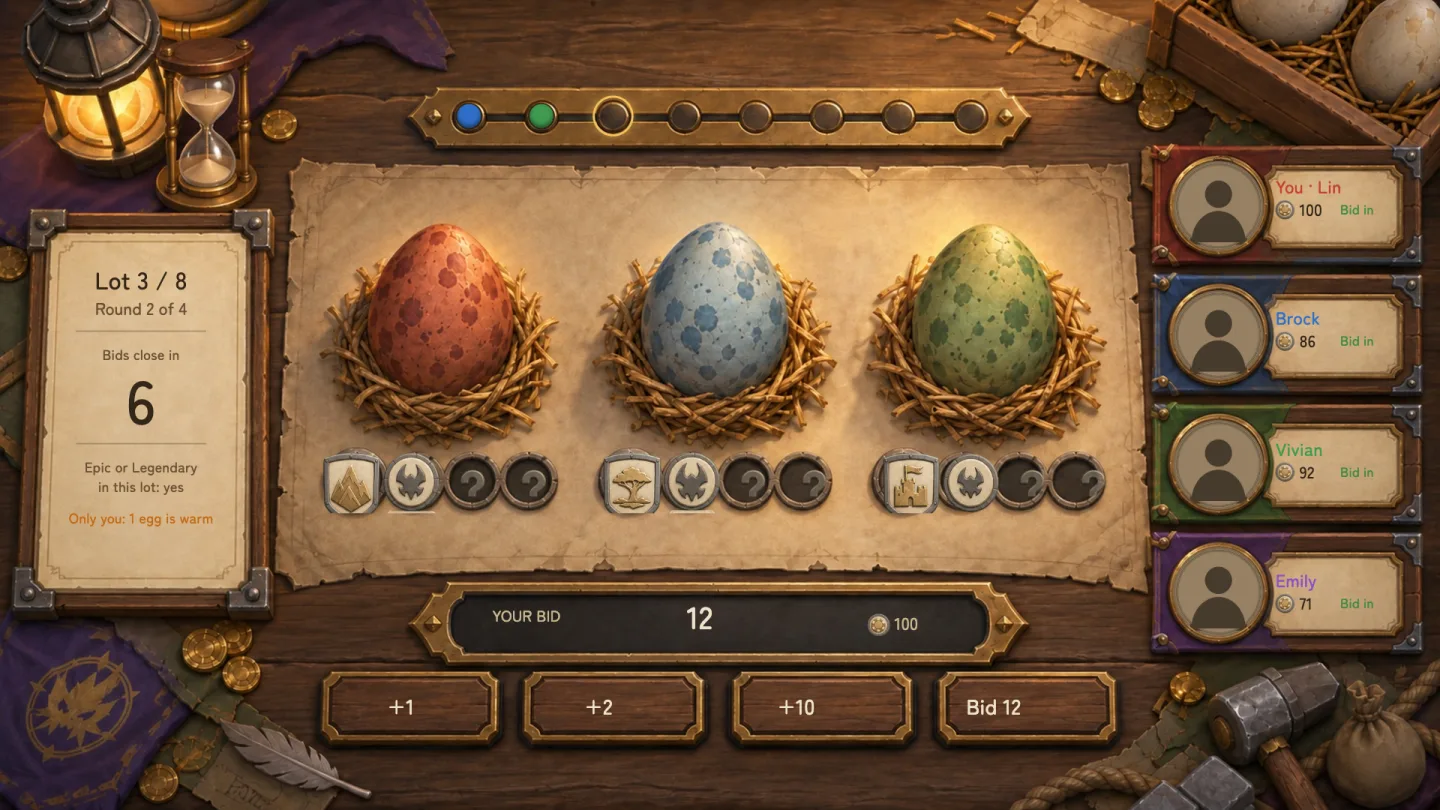
Eggs come in lots of three. The shell colour gives the element, the auctioneer says only whether the lot holds anything epic or legendary, and four players bid blind. To win in round one you must bid twice the runner-up, then 1.6×, then 1.3×; otherwise another clue turns over: origin, size or temperature, in a different order every lot. Each clue narrows the field, but by the last one everyone at the table can read it too. You only ever learn who bid, not how much. The winner takes all three eggs; losers keep their chips and come back richer.
The arena
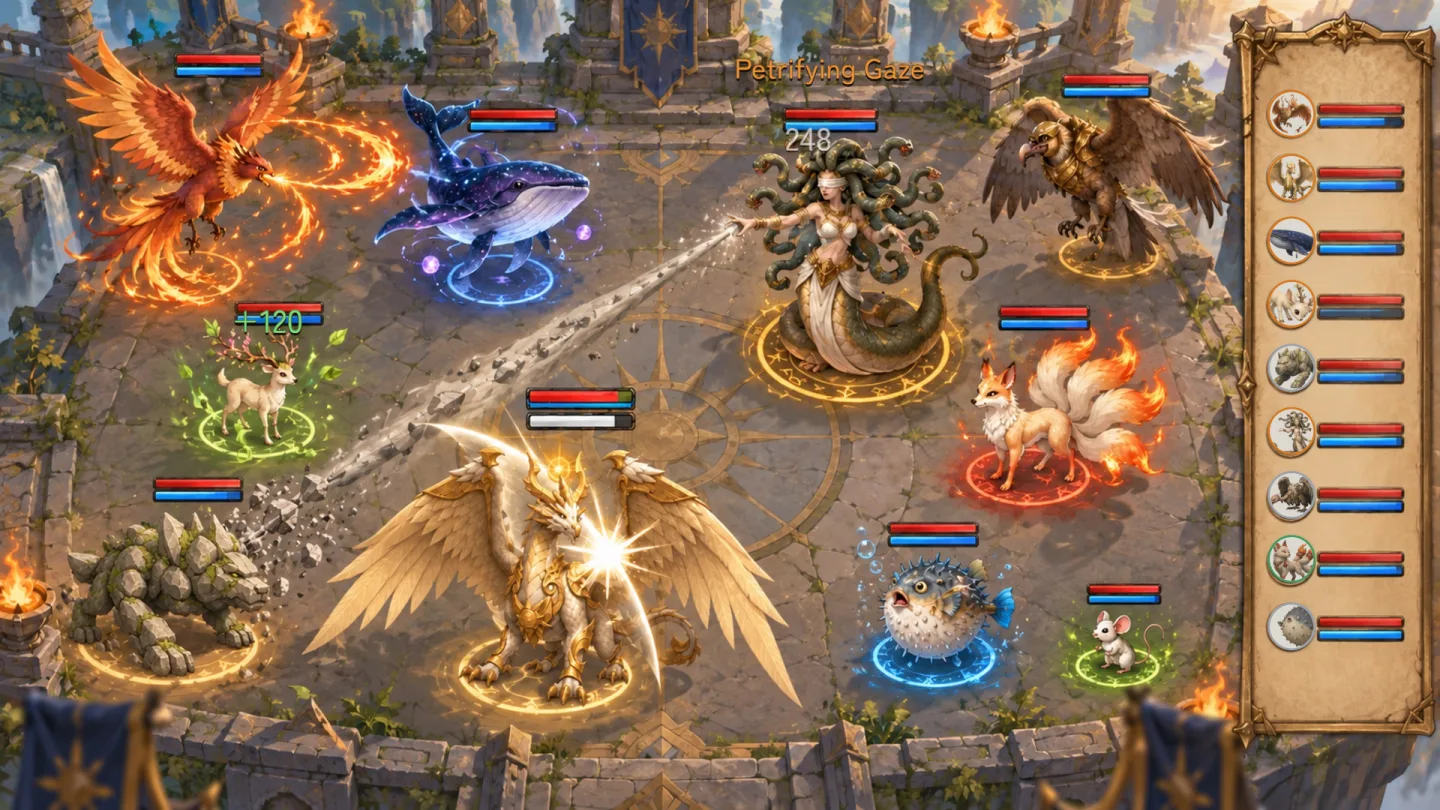
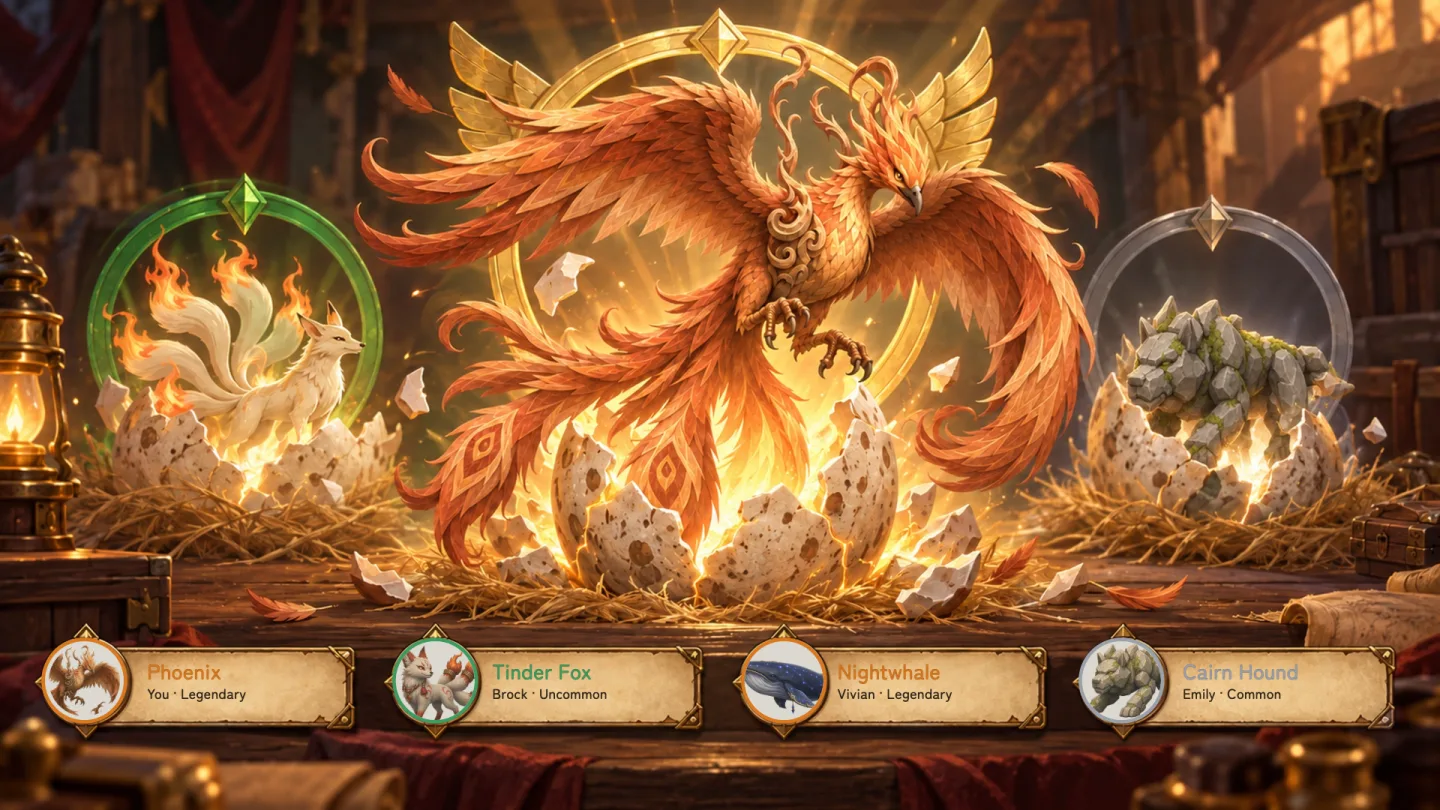
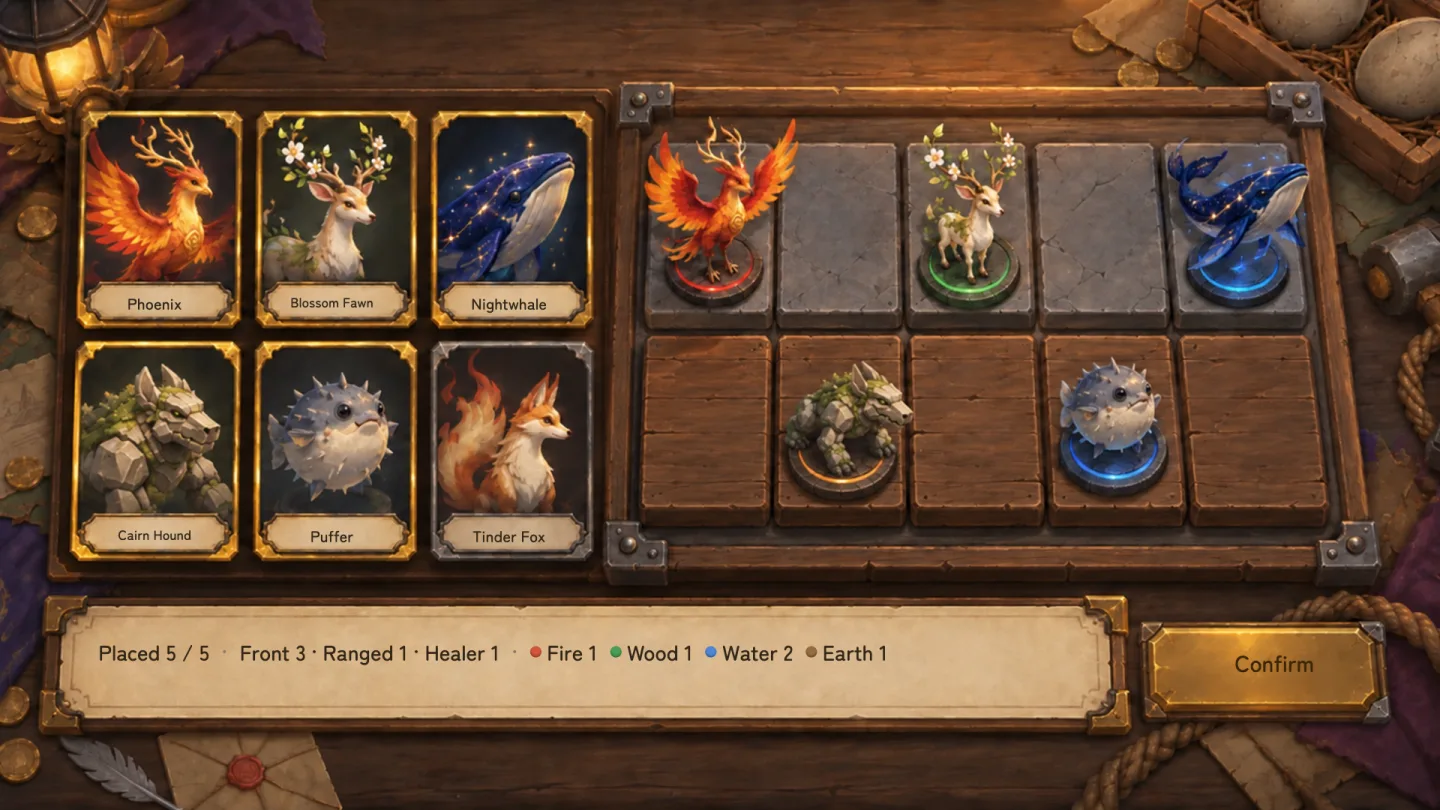
When all eight lots are sold, every egg hatches at once: identity, rarity and traits revealed together. You pick five for a two-by-five grid and the fight runs itself. Skills fire on mana rather than cooldowns, the five elements counter each other in a cycle, and healing fades after sixty seconds so every fight reaches a result. Two semi-finals run side by side; before the final and the third-place match you may change your line-up, knowing your opponent has already seen it.
Built to be tested
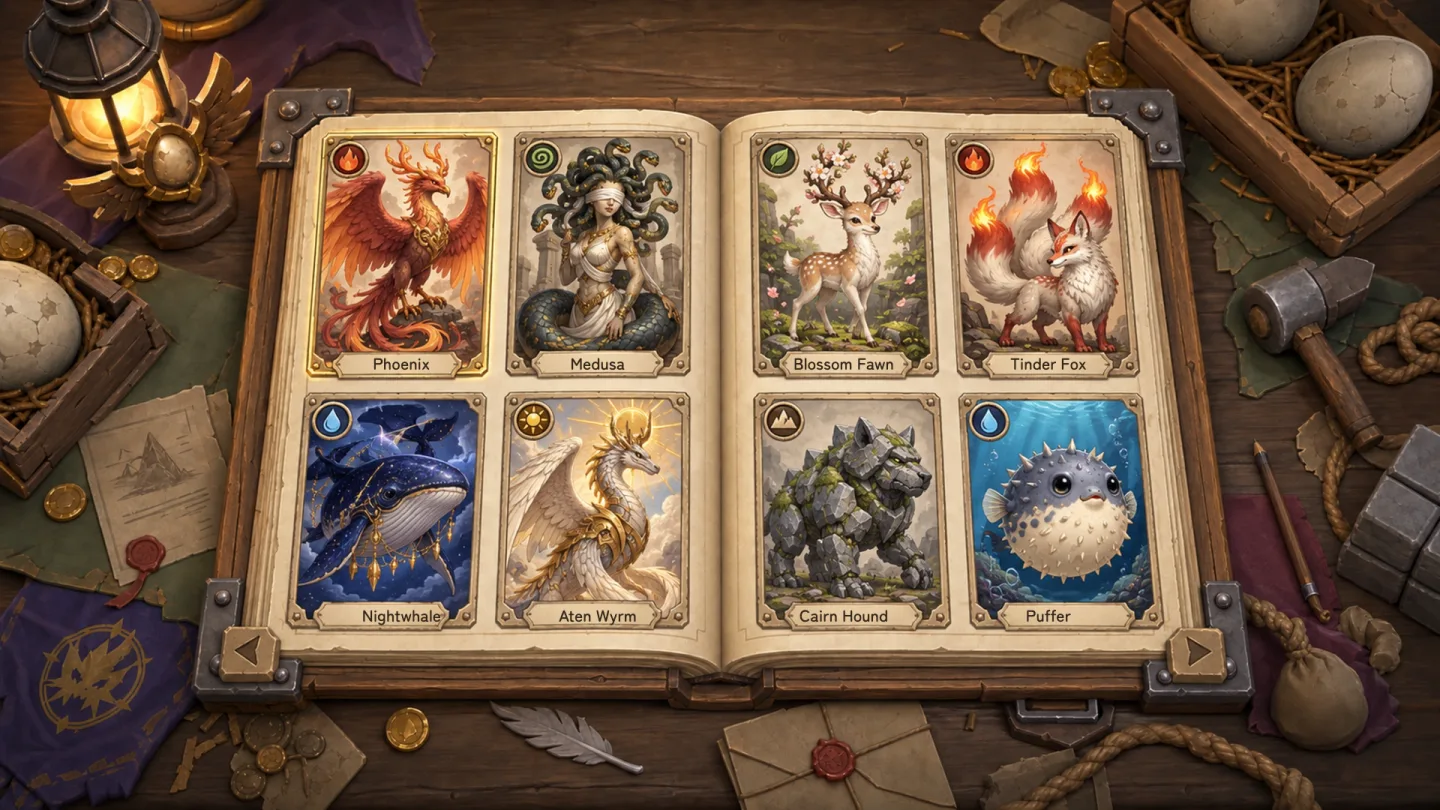
A match runs as a pure-logic state machine with no reference to the UI: commands in, events out, seedable, able to run headless. The same split is what an online server would need. Every unit, trait and rule lives in CSV with a checker that reports bad rows by file and line. One command runs the regression: uniqueness of all 58 creatures, every auction edge case, 300 all-bot matches for the economy, 300 battles, and a bot driving the UI through a full match. Character balance was measured over 400 head-to-head matches.
Where it stands
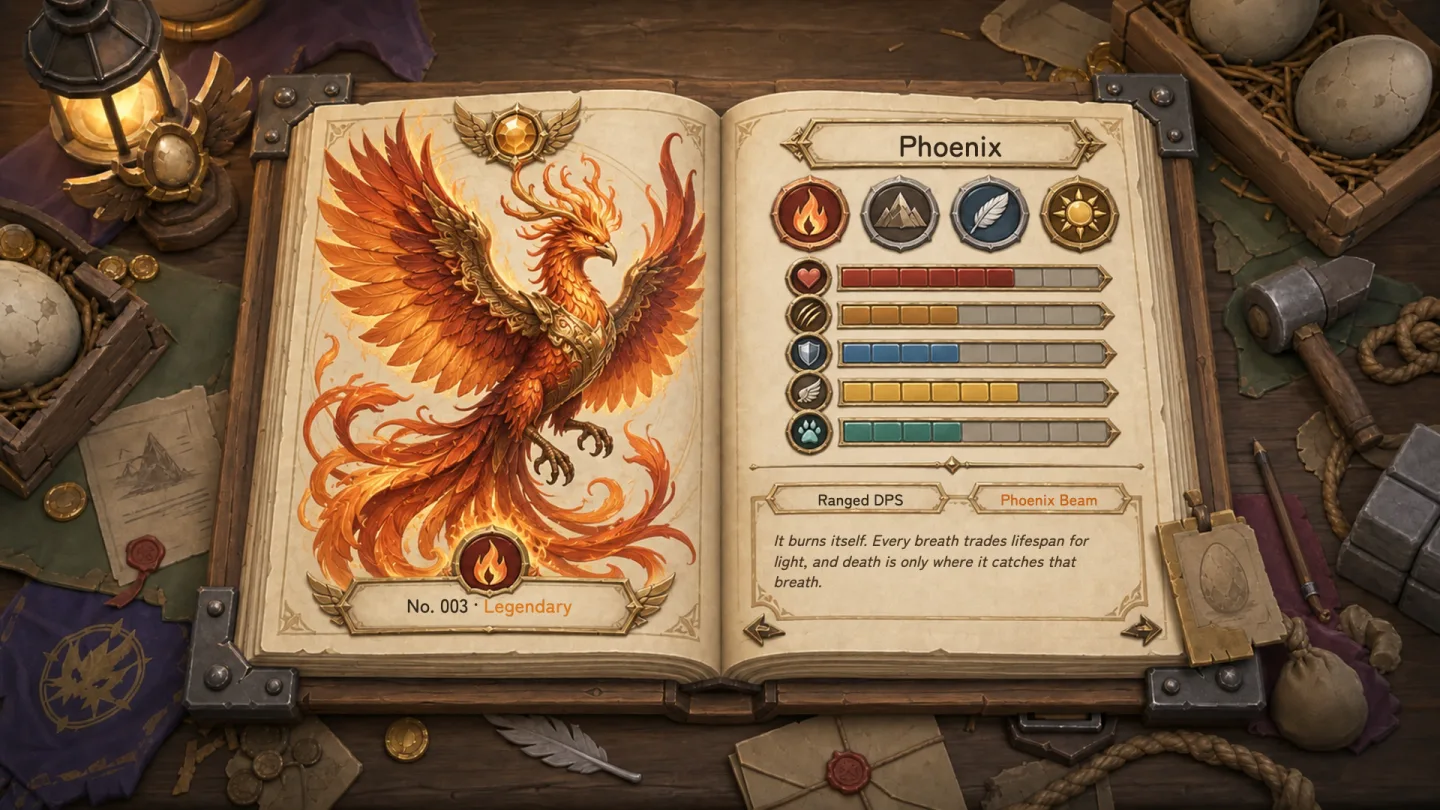
A playable single-player prototype against bots. Online play is designed but not built; with auctions turn-based and battles fully automatic, the plan is for the server to compute each fight and send the result as an event log. Numbers are placeholders, most creatures still use stand-in art in the game, and the character passives are being reworked. The lobby and character select shown here are running in the game; the bestiary, auction, hatch, draft and battle frames are concept art for where it is going.